
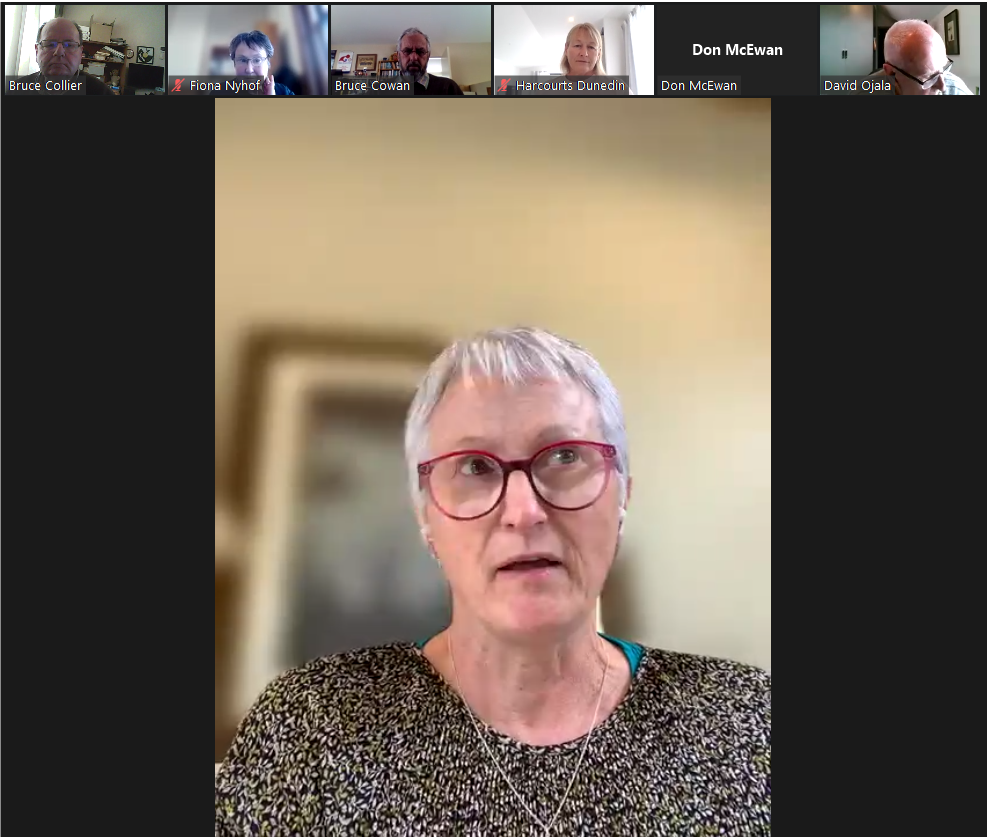
Due to the spring snow disrupting travel in Dunedin, we made a reluctant but late call to hold the meeting on Zoom. Our scheduled speaker Corinda Taylor from the Life Matters Suicide Prevention Trust was able to join us and acknowledge our clubs donation of $3261.15 (being their share of the 2022 Circus Quirkus proceeds).
She then shared with us what the Life Matters Suicide Prevention trust does, and how it’s busy and immensely important work helps people in need, both in a direct and indirect way via advocacy for improvements to the health care system.
She then shared with us what the Life Matters Suicide Prevention trust does, and how it’s busy and immensely important work helps people in need, both in a direct and indirect way via advocacy for improvements to the health care system.
Corinda started by telling us a little background about herself, she and her family moved to New Zealand from South Africa, initially settling in Southland but then moving to Dunedin so that her children could attend high school and University in the city. After the tragic loss of her son to suicide Corinda founded Life Matters Suicide Prevention Trust. She founded the organisation to address issues associated with mental health support services.
Corinda categorised the work the organisation does into three areas: Prevention, Intervention and Postvention.
Corinda categorised the work the organisation does into three areas: Prevention, Intervention and Postvention.
Prevention is about education. Education is key to ensuring people feel safe to talk and know that others can help them without fear of any shame or the stigma that still exists around mental health issues. At the Hope Centre in Albion Lane, Dunedin, two educational workshops are offered, one on mental wellbeing and health, and one on suicide understanding and prevention.
Interventions are designed to support people in crisis. Trained peer support volunteers operate a ‘crisis café’ which is a social, non clinical support model for people who are actively suicidal. Often they may be referred from clinical services or health services, but need more time to talk, be heard and guided through support services available. Life Matters Suicide Prevention Trust contracts five clinically trained counsellors and sets up free counselling services for its’ clients. Ten hour sessions at $100 per hour ex GST are typically funded by the trust.
Postventions are important for the trust . This area of their focus is to help and support families suffering from bereavement after losing loved ones to suicide. Life Matters Suicide Prevention Trust advocates for people in crisis. Corinda is a dedicated and determined leader who personally believes ‘no one should die in despair and alone in the health care system’. She shared her insights and concerns as why NZ has one of the highest suicide rates in the OECD with youth and males in particular at risk. She is a wealth of knowledge and she drives change having helped to initiate the Government inquiry into mental health and addiction and working actively to make submissions to Te Hiringa Mahara – the Mental Health and Wellbeing Commission, and Justice Select Committee, as recently as today.
Interventions are designed to support people in crisis. Trained peer support volunteers operate a ‘crisis café’ which is a social, non clinical support model for people who are actively suicidal. Often they may be referred from clinical services or health services, but need more time to talk, be heard and guided through support services available. Life Matters Suicide Prevention Trust contracts five clinically trained counsellors and sets up free counselling services for its’ clients. Ten hour sessions at $100 per hour ex GST are typically funded by the trust.
Postventions are important for the trust . This area of their focus is to help and support families suffering from bereavement after losing loved ones to suicide. Life Matters Suicide Prevention Trust advocates for people in crisis. Corinda is a dedicated and determined leader who personally believes ‘no one should die in despair and alone in the health care system’. She shared her insights and concerns as why NZ has one of the highest suicide rates in the OECD with youth and males in particular at risk. She is a wealth of knowledge and she drives change having helped to initiate the Government inquiry into mental health and addiction and working actively to make submissions to Te Hiringa Mahara – the Mental Health and Wellbeing Commission, and Justice Select Committee, as recently as today.